
On Wildfires
Burning ourselves through stories

Good morning readers of Pen in Fist! Apologies for the long silence. As the world heats up and the fires spread and speed up, the writing slows down. Writing is a physical activity, after all. The mind is the body, and somatic energy is drained by heat and the stress of the burning planet. So for the coming months I’m going to focus on writing short-burst essays focused on other pieces of writing. I’m starting with one of my own from my book Veganism, Sex and Politics on the timely topic of wildfires.
Keep reading, keep writing. Comment and stay cool.
While writing this chapter in July 2018 I look out the window and my eyes settle on the flat lawn, yellow and thirsty. Northern Europe is burning. Forest fires rage near the Arctic Circle and Sweden has hit the highest temperatures since record-keeping began in the late eighteenth century. I have just returned to London from a week camping in the fjords near Gothenburg, dipping daily in the salty waters off the rocks to keep cool. The locals are bewildered. A comment by a woman from Stockholm startles and stays with me: farmers are having to kill more of their animals than usual at this time of year because without enough rain, they cannot feed and water them.
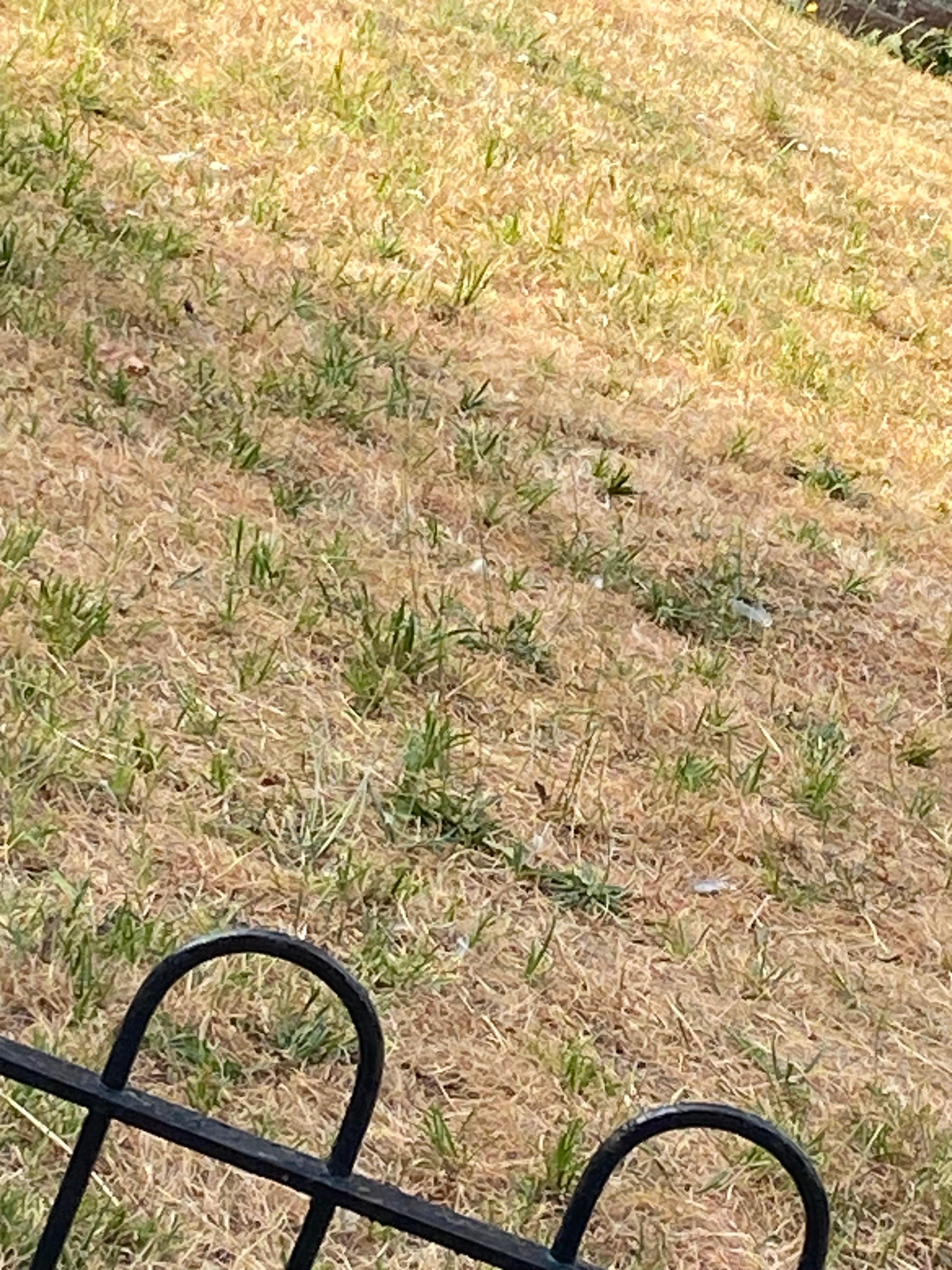
Rereading one’s own writing can ignite all sorts of feelings and thoughts: familiarity, boredom, regret. Going over this passage from eight years ago provokes in me a sense of déjà-vu. I still write in the same corner of my small first-floor flat overlooking the same patch of grass. In July 2026 the grass is once again bleached, hard and dry as uncooked spaghetti. My Instagram feed is one long reel of wildfires in Northern Canada, France and Spain, some of which have destroyed entire communities.
We’re telling the same stories, but the news never ends.
The anecdote above about the farmed animals in Sweden being slaughtered before their time caught my attention because back in 2018 the death of farmed animals was only newsworthy for its untimeliness. Farmed animals slaughtered at the “right” time, in order to become food for humans, is a violence so naturalised as to be unremarkable, seen only by those people tasked with the kind of dirty work most consumers never engage in.
The hot summer and drought that year briefly brought farmed animals into people’s consciousness in a way usually reserved for wild animals, whose lives and deaths are more often reported during periods of intense wildfires. (These days lots of the images in my feed feature photos of moose and other large beasts running from the flames. I do not recommend watching these images any more than I would recommend watching a video of a farmed cow having her throat cut.)
It’s a truism of political writing that in order to impress upon readers the urgency of the issue at hand, with the aim of getting people to act, we need to tell the right stories. “We need different stories” has become a mantra of contemporary progressive activism. In the field of ecocritism scholars often ask how we can tell stories that both capture the urgency of environmental destruction and inspire action through the stories of people whocampaigning against climate change.
In his book Slow Violence and the Environmentalism of the Poor, Rob Nixon asks:
How can we turn the long emergencies of slow violence into stories dramatic enough to rouse public sentiment and warrant political intervention, these emergencies whose repercussions have given rise to some of the most critical challenges of our time?
Inspired by Nixon and the activists and writers highlighted in his book – including Arundhati Roy and Rachel Carson – in my own writing I asked how we can tell stories about farmed animals that could rouse not only compassion for their fate, but also awareness of their place in the commodity chain that contributes significantly to climate change: “How might we find stories that help us better to perceive ‘the long emergencies of slow violence’ that affect different species, including people, without pitting them against one another? What kinds of stories might move us to change?”
I still ask myself these and similar questions every day in my writing and in my activism. But today I’m less confident that in order to raise people’s consciousness what we need is high drama, less sure that exposure to images of mass destruction will lead to awareness and then to change.
This story about the relationship between storytelling and political change has become too simplistic.
Increasingly I wonder whether the very speed of the stories and the way we tell them might be part of the problem – leading to burn out (“compassion fatigue”) and confusion not only about what is actually happening, but about what can be done. Even when we think we have the “right” story – the one that provides new information, the one that focuses on voices or bodies too often left out of mainstream media and publishing, and does so in a way that is bound to generate lots of attention – we have less and less control over how those stories circulate, who will read, watch or hear them, whether they will believe them, what they will do with them if they do – or, equally importantly, if they do not.
I remain convinced that there is an ethical value, an ethical obligation even, to bear witness to the violences around us. But I’m less sure than I was a decade ago about the urgency of finding the right story – “changing the narrative”, in the trite formulation repeated ad nauseum by well-meaning activists.
If I could travel back in time from my place in this uncertain future, where the present is quickly swept away from under my feet, I would still want to write about mass animal death as part of – rather than a footnote to – the story of mass human death and the destruction of the planet. But I would by curious at my presumption that the slowness of these stories is what makes them more challenging to tell, more likely to fly under the radar.
As the world burns before our eyes and blurs through the haze, the one thing that seems clearer than ever is that even tales that spread fast as wildfire might not be enough to make the difference we need.
Pen in Fist is written by me, Carrie Lou Hamilton. You can find my other writing and projects here. If you like what you read, you can leave me a tip.
This newsletter is human written. No generative artificial intelligence tools have been used for the research, writing or editing of this post. The image is from my personal photo collection.
Thanks for your support.